Having not had a long day out birding since before my son's wedding, I headed for Slimbridge as rumour had it that it was starting to attract more waders including some I have never seen before. I arrived there nice and early but unfortunately it looked like it was going to be a very grey day.
First port of call at that time of day was the Rushy hide, which was also one of the hides that had had good views of Little Stint and Curlew Sandpiper.A lone Snipe ws having a snooze on the fallen branches
with a Grey Heron on sentry duty at the back of the Rushy area.
A Woodpigeon decied to oust the Snipe and take a drink.
There were 3 Curlew Sandpipers but they were over halfway down the area and heading away and in poor light. I took a couple of record shots just in case but would revisit this area anyway.
The Woodpigeon refused to give up his seat and the Snipe began to feed.
Juvenile and adult Goldfinch came in to drink.
Meanwhile back at the branches theWoodpigeon was replaced by a Kingfisher
which then took up a more central position for a couple of minutes before zooming off.
Meanwhile the Snipe crossed to one of the islands and made himself comfy in some foliage.
Time to head off to South Lake hide to see whether there was anything new there. Lots of eclipse plumage Shoveler
and some Greylag that were beginning to stir. The Black Headaed Gulls, Redshank and Lapwing were there in numbers but were all still tucked up and were horribly backlit by the grey sky.
Moving on to the Kingfisher hide there was, of course, no sign of Kingfisher(-:). The Buzzard was peering intently at something in the longer grass so I'm sure the Barnacle Geese were safe.
Plenty more Shoveler about on this pool too
as well as at least one pair of Gadwall.
Yet more Shoveler.
On to the Zeis hide, where everything is usually a long way off or is immediately in the reed bed below. Today everything was a long way off this picture shows how far, even with the 400mm lens(-:). Also half the trouble is that verything is so small and with the dark background I guess it makes autofocus struggle to find some contrast - that maked=s it hard to determine which little wader is which.
However, when they start flying its a little easier to make out what they are as the birds are slightly larger (wings out) and there is more contrast for autofocus. I believe this crop shows Ringed Plover, a possible Little Stint at centre and a Dunlin at the rear.
Whilst watching this Kestrel we noticed a Hobby fly in below
and it clearly put everything up again - Black Tailed Godwit, Lapwing, Dunlin etc
The Hobby carried on down the pool
and teh Dunlin carried on circling.
No sooner had they settled than a Marsh Harrier flew over
A short burst of light made some of the distant shots a little easier to pick out some of the waders - here we can make out Ruff and Dunlin at least.
Then a huge squadron of Canada Geese flew in.
I made a quick call back at South Lake hide - the Redshank had stirred but many of the Godwits had dispersed and those birds lurking in the distance were still badly backlit.
Making my way back to the Rushy hide again, I was delighted to see that the Curlew Sandpiper had moved much closer to the hide.
A Little Egret flew in for a preen and a snooze
and spooked the Snipe which flew off to another island.
A green Sandpiper was feding in the shallows
and the Snipe walked past one of the Curlew Sandpiper - good for size comparison.
Something spooked the Snipe which in turn spooked the Sandpiper
though this Green Sandpiper remained unmoved.
The Curlew Sandpiper kept coming closer
and more Goldfinch came in to drink.
As the Curlew Sandpiper started to retreat I moved down towards the Holden Tower. A kestrel over the Tack Piece was mobbed by Corvids
and a group of Long Taikled Tits passed through the Hawthorn bushes.
The Hobby that had been visible fromthe Zeiss hide was now to be seen quartering the Dumbles area
and the Kestrel had evaded the Corvids and looked like it was looking for a place to rest
Out on the Dumbles a Peregrine was sat on a log, it looked like it was on the remains of a kill.
A pair of Common Crane arrived
and the Hobby carried out another pass, the last time I saw it.
The Kestrel had found somewhere to rest, just below the hide giving us a nice photo opportunity
before flying off to continue huntung over the Tack Piece.
On the way back from the Holden Tower, a stop in the Knot hide provided some reasonable views of Chiffchaff feeding in the reeds and hawthorns.
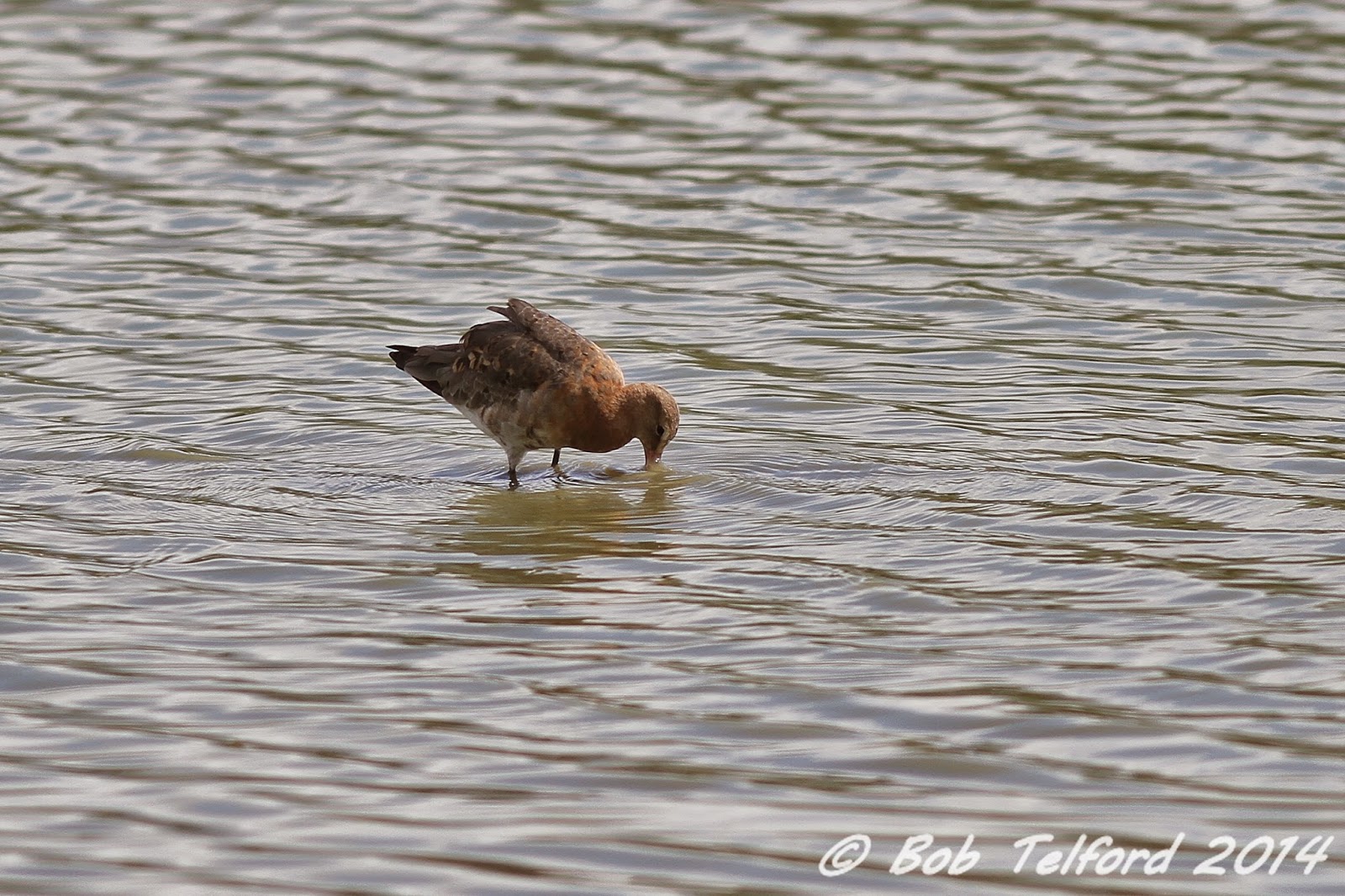
From the Martin Smith hide a small group of Black Tailed Godwits were quietly feeding.
A last call at the Rushy hide on exit gave us a group of Ruff with a Curlew Sandpiper about halfway down the pool. The Sandpiper moved further off but the Ruff obliged by coming very close.
Then it was time to leave(-:).